Wednesday, May 4, 2011

Gone....But Not Forgotten

Au Revoir, Arrivederci, Ciao, Goodbye Osama.


After years of being sought by every asset the free word could commit, Osama Bin Laden is dead. Reports that a S.E.A.L. team operation ended with the killing of the worlds most wanted man in a compound just outside Abbottabad Pacistan are all over the world press.


I wont even try to address the number of theories concerning Why now? or if it was indeed him, If he was dead years ago and shadowy government types kept him on ice to perpetuate the war and thus occupy lands rich with oil, was his body buried at sea or dropped over some remote mountain range. I don't care. I don't need to see his death photo, birth certificate or body. I have been seeing too much of him over the last decade. On Television, in News Papers and of course all over the Internet. I myself once thought I spotted him staring longingly out of a window at a Comfort Inn near Niagara falls N.Y. The thing is, as of now, the world believes him to be dead. Who am I to doubt that? (Its a grassy knoll thing)


What does that mean to us as a nation and particularly as a industry?


As a nation, we sigh with a kind of relief that an evil man has met with Justice and can no longer hurt Innocent people. Al Kidea may still be active and state sponsored acts of terror may still happen, but we as a people feel we have struck a decisive blow against radical Islam.


Is that true? who really knows, only time will tell.


As an industry, terrorism has been very good to us. Corporations and businesses of all kinds have been made aware of the need for security professionals to work close by their side and be considered in day to day decisions. The Europeans have known this for decades and made use of security professionals in many aspects of their lives both publicly and privately.
Carlos the Jackel (llich Remirez Sanchez) once the worlds most sought after terrorist (and trained in Iraq) started a trend in 1975 with his attack on OPEC and subsequent attacks of western businesses. Security teams were used as never before. Most were recruited from the military upon discharge with a high number of personnel coming from the Air Force. Their back ground in keeping secrets and "area security" being a commodity. Special training schools such as ESI in Colorado or later Clearwater in Great Britain sold their unique knowledge and skills to "worthy" patrons. Even the under world began using professional security staff to over see their business. The Cartels of Mexico have some of the highest numbers of security teams.
Hmmmm, I wonder why?


So it goes that the realization of legitimate threat has spawned an industry that grows even today. On the domestic scene, incidents such as Oklahoma City, the Unibomer even Virgina Tech and the attempt on Congresswoman Giffords, have proved that there will surely be no shortage of People, Places and Things that need security protection and oversight.

Will the demise of Bin Laden slow our growth or reduce the need for security? I think not.


There is always the threat of reprisal and the need for the enemy (whomever that is) to prove they are still out there. Moreover, now that the top gun is gone, someone will surly feel the need to take his place. It wont be long before we are forced to learn the proper pronunciation of some new name or to recognize that new face. We've done this all before and I expect we are doomed to repeat it over and over again. As the new improved head of the snake rears up, we will need to counter it with whatever new deterrent we can learn and exploit.


He is gone but the lessons he taught us, like those of Carlos, Timothy Mcveigh, Ted Kaczynski or Jared Lee Loughner will live on in the hearts of security professionals around the world. Our time honored quote "Not On My Watch" still echos in our ears and is felt in our hearts.


Keep the faith


RJ Mosca

Friday, April 22, 2011

HISTORY AND THINGS TO COME

Historically speaking, the security industry has gone through many changes.

The "Guard" of years gone by were more often then not, a well intentioned individual trusted to do the right thing. He walked the business after hours in the "Night Watchman" mode. Stereotypical flashlight in hand with a ten pound clock over his shoulder and a ring full of keys any jailer would be proud of. These under paid often under respected men of the watch have walked post since the time of Cesar and Queen Anne. First defense against trespass and crime.


At times the lack of respect was justified, as some of these "Watchman" were more professional sleepers then security. Even the Bank Guard of years gone by was seen as an elderly, over weight poorly equipped, under paid figure, more of a facade then an actual deterrent.
You'll notice these characters are no longer with us.

Later the Guard was replaced by the Security "Officer" these men and some times women were better equipped and trained to enforce policy and had a procedural manual to help them better cope with an ever changing scope of responsibilities. Respect was still in short supply as they were often looked upon as wanna bes, a nasty slang for those that dreamed of being in law enforcement but lacked the skills to achieve the position. Although this was not always true, a few I have met did think they were Starsky and Hutch or Crocket and Tubbs. This did not play well with their employers, or me for that matter.

Most however, were eager to learn and took themselves as seriously as necessary to get the job done to their employers satisfaction without going into Bad Boys Bad Boys whatcha ganna do mode.

I worked as a Security Officer for most of my adult life. I believe I was smart enough to sponge up the real world aspects of the job and learn from my contemporaries as well as those professionals that I came in contact with, Law Enforcement and other Emergency Responders, Dog Handlers, Alarm Systems Installers, Locksmiths, CCTV Installers, Self Defense Trainers, Legal Eagles and a host of others that one might never think of in a security capacity yet were critical to the work.

Most men and women working in the industry over the last few years fall into this category. Better trained and equipped both mentally and materially to accomplish the security mission. Deter, Detect, Observe, Report and Respond.

These days and particularly after the attacks of 911, the nomenclature has changed to include Security Professional instead of Security Officer. Blazers or suit and tie replaced the polyester police type uniform of days gone by. This "soft" look enables the professional to ware more hats as I like to say. Tea carting (Polite business escort) Desk post (reception/direction work) usher-ticket taker (access control) all without the para military look that alarms some people. As if the Kevlar coated, H/K toting, knee and elbow pad waring, helmet clad storm troopers walking the streets of New York, L.A. and Chicago as well as many other U.S. cities do not alarm people.
I digress.

Unfortunately there exists a branch of security that all too often falls short of the mark set by an ever evolving and improving industry. The "Guard Service"provider. These puppy mills for security staff are popping up all over the place and for all the wrong reasons. Insurance and state regulations have mandated that some types of businesses have a security component in their charter or operations plan. To feed this need some "schools" or worse yet providers take on the task of seeing to it that prospective security personnel meet the minimum requirement set forth by state mandate and then go so far as to employ these minimally trained neophyte staff as "Guards". Don't get me wrong there are a hand full of security companies out there that have always set the bar of requirement and expectation very high indeed, but these few are just that....few! The puppy mill guard employer tends not to last very long, move or change names or get closed down by lack of work or litigation and in some cases due to low bidding and employing poor candidates that do not foster confidence. Most spend more time reviewing their LLC or brushing off their "sales suit" then their training program, if they even have one. These "providers" tend to be store front cookie cutter businesses that provide low cost/low quality service instead of the type of security professional we would like to employ or have staff emulate.

Guards in their employ know that should they have an issue or just not fit in, they can be reassigned to some other post within the spider web of contracts. Worse yet, some just are! Guards are bounced from one site to another like porta potties on a construction site. No loyalties, familiarization, intimate knowledge or staff recognition. These are the traites not only preferred by business but are paramount to security, yet very often absent.
Security staff that make a poor judgement call are let go rather then counseled. It is a disposable environment for most contract security guards. It is easier for the service provider to claim they have "handled the issue" by letting the guard go then invest time nurturing good team involvement and cross training that might have avoided the poor judgement call. These things take time and time is money. What this leads to is guards that fear making decisions, take no initiative, focuses on self instead of the team or serving others. In short not a security person at all, just what appears to be for the sake of state regulation, insurance mandates or union contract. This leads to very poor public relations for the company that hires the service and at times litigation, loss of assets and a damaged reputation. Businesses must remember that a person that has a bad experience with security will remember YOUR name not the name of the contact service you hired.

Of those that do walk the walk I can say, Good luck brothers and sisters. Yours is an up hill climb. The puppy mills are tainting your good names and when they can , stealing your thunder.

The days of the inept night watchman may be returning if we let them. Only through stead fast perseverance and a never ending quest to be the best at what we do, will we survive as a respected industry.

RJ Mosca

Sunday, April 10, 2011

PERSUASIVENESS part two, what we say/how we say it

We can use tools such as what we see or what we hear to gain compliance, but how can we be persuasive with what we say or how we act?


Requesting someone to relinquish free will and getting compliance is a special skill. It starts with selling yourself. Like anything for sale, it's all in the packaging. If you sound like a south Bronx cab driver (no disrespect, I was born in the Bronx) when you speak, you are bound to meet with resistance. How we speak says a lot about who we are. Never and I mean never use common language while on duty. It lowers you to the level of the common man. A common man is generally not in authority to request compliance.


Always be polite and respectful no matter who you are addressing. Let this be what you are known for within your organization, it should be your reputation.....it is your reputation.


The ONLY exception to this rule might be while working covertly, such as loss prevention working “internal” theft. You may need to sound less stuffy and more "street' while trying to gain trust or gathering evidence.


We should strive to use terms that include rather then separate others.


A priest may say: "All God's People"....implying you are one. This "includes" you, you want to belong, join, and participate. A politician may say "Every Good American".... again you want to be considered a good American so you fall in line.


It’s a simple and effective way of putting a person into a cooperative category, they joined the group, and you’re half way there. When you hear the old line "what’s a nice girl like you doing in a place like this?" it implies you think she is better then this place and so are you, it’s a subtle message (most smart women will see right through) but it is a good example of "including". Its simple but it works.


Situation, Dialog and example: Hospital Environment


A patient is being held for Behavioral/Mental Health evaluation.


As security, you will often be first intimate contact and how you treat the patient sets the tone for his/her therapy, as well as his feeling of safety, also true for the safety of the staff not to mention yourself. An open casual dialog is important. Many of these patients are here against their will and will look for any opportunity to elope if given a chance. We could strap them to a bed or chemically restrain them but this is not a "therapeutic" environment and not likely to achieve trust or gain compliance, it may only force the issue, setting up barriers, causing mistrust and requiring emotional repair. You want to include them in the process not mandate or force….if possible.


The key is dialog, constant and structured communication. This should include positive wording such as “we are here to help you” as apposed to “the doctor says you can’t leave yet”. Introduce yourself and maintain polite eye contact. Explain why you are there, be honest but do not over state the obvious. Use active listening and repeat what the patient is saying. Let them know you hear and understand them. Be sympathetic and understanding. Be conscious of body language (his as well as your own) Remember you are part of a very important process. I try to treat patients as if they are relatives, a brother, sister or cousin. The idea is you remain attached and part of the experience rather then just a blocking force to be dealt with.


Begin by being proactive and staying in that mind set. I often offer comfort items like food or drink (if the Doctor agrees, ask before offering) it serves as a peace token and subconsciously the patient now owes you some kind of gratitude. Don’t count on that but it may help. Never go off to retrieve such items, that is not your mission. You maintain watch while support staff brings blankets, food, coffee, phone etc.


Keeping the patient calm and conversant is easier then calming a person down after they have boiled over. Letting them know the steps in the process avoids the feeling of surprise and helplessness, they need to feel they are part of what is happening (included) not just having it thrust upon them. When appropriate explain everything you can to them, hold back only what is necessary or directed by medical staff. Never make promises and don’t build hopes on speculation, it’s not fair to the patient to say things like, “you’ll probably be going home soon, just relax”. This is a big no no. You have no way of knowing what is in store for this person, never act on history.


Once the patient comes to trust you and does comply, it is your duty to brief and educate any shift taking on the watch after you go off duty. There should never be any surprise for your team mates or the patient. If possible introduce the patient to the new watch and let them know they can be trusted, they are still safe and that you will check in on them. Your words have meaning, and you’ve earned their trust. Don’t break it. I always follow up with a patient, if I say I’ll check in on them once they are admitted, I make it a point to do that. It maintains trust and eases the way for other staff as well as the patient. You may encounter this person again some day and this rapport may pay big dividends in the future.


There are times when it may not be safe or appropriate for your contact to be that constant or intimate but it must always be present. You must be vigilant and aware at all times. Position yourself where the patient can see you but do not hover over a Behavioral/Mental Health patient. This only aggravates and incites them. It is not unlike a non verbal challenge. Standing an arm’s length away from me at all times in my opinion is a threat to my personal safety (it closes my reactionary gap) and is an invasion of personal space. I like to stand a bit off sides from a watch using my peripheral vision to monitor them as much as possible. It is less threatening and gives the patient a feeling of privacy. It is a body language technique that sends the “all is well” I’m not staring at you signal. The patient is persuaded to comply based on a relaxed feeling of well being not a situation based on force.


As an experiment, try this the next time you are in an elevator. Stand at what you feel is an appropriate distance from the closest rider in the lift. As people step out, stand your ground. Do not move. At the first chance they get, that person will move away from you as if you were diseased. It is strange how one moment it is just fine for you to be standing at a persons elbow and the next moment they can’t wait to move away from you. People need their space….don’t crowd them!


With calming, respectful tones and reassuring dialog as well as safe body mechanics, we can be watchful and maintain control even without asking for it.


Make no mistake; you must always be on guard to act if things change. Every step while in close contact must be reviewed and mental scenarios worked out just in case the “what if” factor happens. Having well trained partners is a must when seeking compliance during movement. Transporting a mental health patient can be a dangerous time. The patient is very aware that the window of opportunity to elope is closing and they can experience feelings of desperation.


I always have a patient gown up and remove street clothes and shoes. This can be a strong deterrent. Then again I have seen naked patients try to run for the street, you just never know.


If you remove the fear and mystery and replace it with feelings of trust and compassion, most patients will comply with any reasonable request. Security Officers in a hospital environment ware many hats, baby sitter, transporter, tea cart, prison guard, but it is always about maintaining control. Control is the key, persuasiveness just one tool to maintain that control.


RJ Mocsa

PERSUASIVNESS part one, perception

Being persuasive is a bit of an art. There will be times while in the course of performing your duties that you will need the compliance of people beyond your regular scope of control.
This may be on lookers in a crowd, patients in a medical facility, angry customers, intoxicated individuals, confused or disoriented geriatric/seniors, groups of teens, groups in time of emergency, persons in escort, etc. The issue is you have no real authority. That is to say you are not empowered with the "recognised" ability to command compliance. This can be problematic in times of crisis but not as difficult as you might think. If a security officer is in uniform and an emergency arises, he can expect some cooperation from the crowd. It's in our upbringing to respond to "official" requests by authority figures in times of crisis. The uniform, even though it has no real power is the symbol of knowledge and professionalism. Confused, scared or otherwise receptive individuals will blindly follow "the uniform" if commanded. We seem to need a symbol of authority to base our compliance on.

Two quick examples:
1) I recall years ago while working in uniform, I was on my way to work the day before Christmas. The roads were slippery and the day was dark. A line of cars including mine were stacking up at a red light in a major intersection. The car behind me had stopped a safe distance from my vehicle but the car behind him was not paying much attention and was moving too fast for that days road conditions. It hit the car behind me driving it into my vehicle. I put my flashers on and moved to the curb then got out to asses the damage. The man behind me did the same. It appeared he had little damage as did I. As I walked back to the third vehicle, I could see the woman at the wheel melt at the sight of my uniform. She never stopped to read my I.D. or collar flashes, she just saw the crisp line of a police uniform and as far as she knew, it was going to be a real bad Christmas, she had just rear ended a Cop. Did she?

No but when I asked if she was okay and asked for her insurance card, her answer was "Yes Officer". Although this is no more then any other person might ask if involved in an accident, the uniform gave me the justification in her eyes to request anything I needed. I would never purposely or intentionally attempt to pass myself off as law enforcement, but in times of crisis people are blind and will make these assumptions on their own.....Careful folks! this is a double edged sword! I told her there was no damage and to have a happy holiday, my Christmas gift to her. She was still yelling thank you officer as I walked back to my car.


2) While in a public building that was under partial renovation, the fire alarms sounded. The crowds of people walking by me in the lobby seemed to ignore the alarm and just looked around as if waiting for some thing else to tell them what to do (as if the alarm was not enough). I was off duty and in street clothes but I walked to an exit reached into my pocket an took out my keys (complete with BEST whistle) I blew three sharp notes and asked everyone to step this way please. Without hesitation the wanderers started advancing on the door to the street. I only needed to ask that they remain calm and move slowly (the expected term at such times) to gain compliance. The whistle was the instrument (no pun intended) of command. After hearing the alarm, this was all I needed to legitimize my request. As it turned out, a worker had set off the alarm while soldering pipe and all was well, but the alarm was sounded and the proper response was missing. I would rather be safe and embarrassed then sorry for my inaction.

The lesson is of course, that some people can and often will focus on what they perceive as symbols of authority. We must be cognisant of these tools and learn to use them without exploiting them unfairly or unnecessarily.

RJ Mosca

Sunday, January 9, 2011

Secure Communications

ADVISE DON'T ADVERTISE. Security teams and their support must be able to communicate without outside influence or interference. Keep in mind our laws permit any free and open transmission to be legally monitored by anyone with the right equipment. That equipment may be as easy to acquire as taking a trip to the local Radio Shack.


  • Scanners Scanners and handheld monitors are not only available, some are concealable. With ear pieces, these units could be used on your security site to locate and assess your team. In areas like sports venues particularly race tracks, scanners are not only used but allowed so the crowds can listen to the drivers talk to the pit crews. Scanners can be small enough to hide in clothing and the ear buds look no different then those used in any Ipod.


  • FCC Licensing of particular frequencies for reasons of exclusivity is a must. Keep in mind this area of exclusivity is limited to a particular geographic region. If your team travels beyond that area you may be operating in areas where others have licence to use that frequency. Not only can your team communications be heard by others but you may be "Walked On" meaning another users talking over your transmissions.


  • Options Multiple frequencies should always be available, this keeps primary channels clear of small talk, separates sections within the team and allows for back up should systems go down. Most stationary radio systems will use a repeater to expand the systems range (with appropriate licencing) and these systems might be effected by power outage, internal damage or intentional sabotage. If your radios are set up to work exclusively on repeater, you are off the air. A unit to unit channel should always be available. These "Talk Around" channels will not have the range of the repeater frequencies and in some situations might even be line of sight, but you will still be talking to your team. Consider allowing certain members of the team to bring portable units home with them at end of shift. Having responding staff on the net without having to enter your building to retrieve a portable might be important should you have a bio/chemical event. It also allows them to post as soon as they arrive on scene. Shift supers can always make face to face up dates once staff is posted and a cordon established. Only lead team members should have access to the system repeaters/antennas and only when necessary. Have a reliable contracted radio technician or qualified staff member for repair work.


  • Covert Systems In smaller yet super critical areas, extremely low powered units may be used for large rooms, auditoriums or halls, these allow you to work in a micro environment without fear of the transmission spreading farther then needed.


  • Cell Phones Cell phones and "Push to Talk" cell features work very well. They are usable across many geographical regions and secure enough for almost any application, providing of course that you have cell service and strong signal.


  • Short N Sweet Call signs, codes and terminology should be learned and used by all security staff as if a second language. These codes should never be shared with non security employees. Any regular security team member will tell you, it is easier and more secure to keep transmissions short and to the point. Codes make this possible. It also allows any message to remain obscure should it be overheard by the public.


  • Extras A combination of Cell phone, Radios, Hand Signals should be employed as the second language of the security staff. Assign call signs or numbers to staff members rather then names. Areas of operation or locations within the facility should be coded as well. The Department of Homeland Security has a number of frequencies set aside for facilities to apply for as a "common" use frequency. After 911 it was determined that some agencies and services might need to talk to each other. If your facility qualifies, applying for these frequencies might be a good idea. Most businesses use three frequencies for security work. The primary "Repeater", the talk around and a second support channel. I am accustomed to using ten including the spacial Homeland Security frequencies for cross communication. I consider this a minimum, Mobile units had their own, perimeter staff has a channel as does command. The others were support and redundant but useful for spacial events. This may sound extreme but that's just my opinion, your needs may differ.


  • FRS "Consumer Grade" Radios such a family radio service, over the counter wal-mart type radios are unsuitable for security work. Their channels are too few, they are under powered and equipment is too easily obtained to listen in.


  • GMRS or general mobile radio service is only slightly better giving the user better range and a larger selection of channels and "coded" sub channels. However seeing how these are still common and some security teams can be a bit lazy in their channel selection, I still consider them unsecured communication and not fit for proper security work.


RJ Mosca

Saturday, January 8, 2011

Gabrielle Giffords Shot 1/8/2011

Slipping through the cracks, a shooter wounded Congresswoman Gabrielle Giffords in Tucson Arizona today.

Our thoughts and prayers are with the Congresswoman, her family and the other victims of this tragic event. We remain hopeful and optimistic that the congresswoman will return to capital hill very soon to continue her good work.

God bless all who's life changed today.

Thoughts and prayers go out to the family and friends Judge John Roll

RJ Mosca

Thursday, January 6, 2011

LARGE AREA OBSERVATION

I had the opportunity recently to sit as an observer / spectator in a local court. The theater was laid out like most venues that demand your attention, stages-churches-school rooms, all made to sit facing front and upright. So of course like an sly audience member trying to catch the magicians misdirection. I did what I usually do, I watched the other hand, I watched every one else. It was interesting to see how the parties involved "Players" put on their best VICTIM or INNOCENT face, each trying to tell their story before ever opening their mouths, each setting the stage/tone/mood to interested onlookers. A very different group from the ones that were just moments ago standing outside in the parking lot smoking and laughing with the support of their family and friends.
The cold, indifferent attitude of the court officers told the story. These veterans had seen the acts before and knew how to remain separated from the emotionally charged parade. I used it as a training exorcise, as usual watching the watchers and studied how they did their job.
Principles of area / group observation.

All The World's A Stage.
Start with the most advantageous viewing spots. These are not the high ground vantage points, looking down on the crowd. That might be alright for a prison exorcise yard, here you need to see faces and the sooner the better. Security needs to be intimate with the area and how it is used by the crowd/group using it or passing through it. In this way subjects stalling or loitering will stand out. People with an agenda are likely to scan the environment. This is an important qualifier, as is pacing, constantly searching of ones clothes/bags. These individuals don't fit in. Their bodies are in conflict with the norm some how and they may walk or move differently, or seem overly alert. These may be stall techniques to give the subject time to reconnoiter the area and time his approach, choose his line, locate cameras, security procedures or even you.
large area observation requires the security professional to be even more vigilant then if watching a single subject. The challenges are based more on speed and ability to scan and qualify quickly then long term scrutiny.

Like the group outside that court room, there is a "transition" thoroughfare, a point where the curtain opens and the act begins. To hold such an act and remain convincing is taxing, hard to do for any real length of time before a bit of ones true face cracks through the facade. This is why most interrogators work for hours upon hours to tire the subject until he "cracks", opens a bit of his true self that the interviewer can peel away to get to the truth. Detecting these players before they arrive at that thoroughfare is critical. Like a nervous teen on his first date checking his hair before his date answers the door, there is a moment where the "Tell" is detectable. A time when the subject goes from who he is to who he wants you to think he is. This is his Poker/Game face.
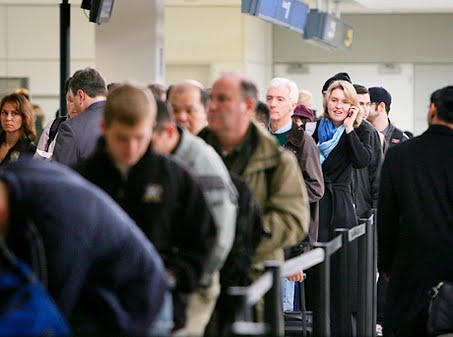
Structured crowds/groups such as those in line at an airport terminal or sports arena are concentrated or "herded" into a choke point so these groups may be a bit easier to scrutinize. Your best area to begin is the end of the line, the space between the door and the perceived end of the waiting area. Subjects of security concern will be most at ease here and will reveal much more of themselves. The act only intensifies the closer they get to the point of challenge be it a ticket window, check in or security cordon. Having a form of stimuli for the subject to react to is good here. It gives security an opportunity to watch subjects as they prepare for the show. An astute watcher will see the signs. I have heard them referred to as "Micro expressions" or "Body indicators" even "Stress signals", I call them "Tells".


Random crowds or groups such as those at malls, concerts or out door venues are harder to cover and will need multiple watchers. The Secret Service has mastered the science of watching from within the crowd. They blend in with subjects of interest and discretely indicate whom within the group is suspect. At that point a uniform will appear to remove or question the subject of interest. It can be difficult to cull through such a group and only time and practice will make you an effective crowd watcher.


Body language is key, as is eye contact. You should note that in this country at least, most people do not make eye contact with strangers unless they need to. It is my experience that the only people that you will catch and hold eye contact with will be subjects that are doing a reconnoiter like you. It could be another person in the security industry or a potential perpetrator. This is the primary reason most protection teams such as the US Secret Service ware sunglasses even on over cast days. It keeps them from making eye contact with others.
Actors often over act. You can see them shift the level of performance as they "present". Some are ultra cool and go over board to seem relaxed. It is a tell when anyone is so relaxed in a strange environment, they stick out. Conversely individuals that seem uptight are almost always worth a second look. Again watch how people scrutinize security staff or anybody in uniform for that matter. There is a difference between those that see and those that are watching.
Watch all the time, at work of course but watch as you mow the lawn, shop, wait at a red light etc.
learning to watch groups that cooperate and comply. What do they do that tells you they fit in and belong. Study the majority that belong and those that don't will be evident.
I once asked a bank president how many types of counterfeit bills he needed to see to learn what makes a good forgery. He summed it up nicely by pointing out that he only studied the real thing, nothing else mattered. The fakes will always stick out.
RJ MOSCA

Sunday, January 2, 2011

OBSERVATONAL SKILLS

I was watching a kid's TV show with one of my children the other day. One of the characters in the story was being scrutinized by another child on the play ground. The first child yells out to the other "Why don't you take a picture, it will last longer". A childish phrase to be sure but for me an epiphany.
I have been watching people and events my whole life, watching was a form of participating when I was a child. Games the older kids played seemed fun even though I was to young for them. So I would just watch. When I grew older and started taking an interest in girls, I watched what the other teens did, how they spoke, stood, walked, joked with their girlfriends and how the girls responded.

This is not some strange fetish, we all did it, I was just aware that I was doing it. Why? Because I watched other kids doing the same thing. I watched the watchers.

I learned for myself and by watching others learn how to fit in. Back then, I learned to put my back against the wall so I could concentrate on the 180' view before me. It became the first step in my quest to watch everything. From peripheral view to peripheral view, my side view idea of horizon to horizon. I would take it all in and take a picture of it in my minds eye as well as real time, absorbing it. Movement, color, shadow. All mixed with sound to form a sort of play I was watching from my own front row seat.

A bit extreme? Yeah probably but no more then any of us do every day of our lives. The difference? I consciously know I'm doing it.

Have you ever seen the look on someones face when they have just mastered a new skill? The detectable and unmistakable look of someone that just "got it". I can spot it a mile away and so can you, if you know what to look for. Being present is a gift few of us understand how to use. People in the business of observing others don't need to "find the zone" they are living in it.

Being a professional observer means mastering many things. Having a working knowledge of things like body language, human nature, emotion, physics (action and reaction), culture, crowd dynamics, not to forget environment and situational awareness. Some times it is things we ourselves cannot detect, subtle yet tangible at some intimate level.

A seasoned hunter can tell when something is coming long before he sees it. The forest changes in ways hard for him to explain but detectable to him none the less. The birds may change their tune or fall silent, small animals like squirrels are suddenly missing or take to the trees, a warm scent may test the nose. Taken collectively they tell the story and he readies himself. I have heard it described as tossing a pebble in a pond. The rings reach out across the surface ever widening and effecting the entire pond. In some ways it is very impressive how such far reaching effects can be heralded by such a small thing.

Scene watching is taxing if you are not practised. Only time and practise can teach you to scan large areas efficiently. We can study large area scanning on another page later for now lets look at people. It is the safest place to start and is after all what your primary concern will be.

When I see a person for the first time, I start at the top of their head and work my way down their body to the foot. I put together a physical description and post it in my mental Rolodex.

As fast as you can, do the following exorcise using the first person you see, be it in person or even practise while you watch Television.

SEX male / female

COLOR, Black, Asian, Caucasian etc (we may not be able to discern an Italian from an Arab or Peruvian particularly at a distance, so we use completion NOT nationality to describe individuals).

AGE you really need to look well here, clothes can throw you off.

HAIR COLOR/TYPE

BUILD Body type/shape/height/weight

DRESS start with the color of the garment on the torso, for this example lets imagine it's WHITE

Followed by the garment on the legs if applicable. Let's say BLUE

If the subject is carrying a purse, bag or item that can be readily described it should be added to the description.

If the items on the feet are distinctive they are worth mentioning as well.

DIRECTION or LOCATION

ISSUE, why am I looking?


So lets look(and listen)to how a quick description-collection and radio call might look and sound like.

All units stand by for description and watch for the following individual:

Male,

Light Skin,

Heavy,

Mid/late Forties,

Balding,

Waring White over Blue,

Subject is acting strangely and is wanted for questioning.

Scan the area quickly eliminating or culling as many as possible until the only persons fitting that description is found. learn to collect this amount of information in two seconds, as you walk your favorite mall, or sit waiting in your Doctor's office, on the bus. With little practice and a new in site on how to describe people, you will remember details better then the casual observer. Do it all the time, a wise man once told me anything I do for thirty days straight, I'll do for the rest of my life. He was right. Practice Practice Practice.


Almost every trial attorney will tell you the weakest evidence is almost always eye witness testimony.


RJ MOSCA

Friday, December 31, 2010

Sensitivity, Political Correctness And Truth

We all have opinions. As stated before on this site, it is part of our job to categorize and collate personalities and behaviours, however at times our assessments might be asked to stay bottled up due to the ever present specter of political correctness.

It is a shame that we who are in a very intimate people "qualifying" occupation can at times be forced to turn off certain receptors that we have grown to trust. In a way it is a form of theft, the stealing of ones opinion. We circumvent or at times are made to ignore facts because they may seem bias or prejudicial. This is wrong.

The facts are the facts and the truth cannot be changed because of what others might think of us. When filing a report avoid the "Saccharin Philosophy" often spoken of by attorneys. This artificial sweetening of the facts may make them more palatable but the facts must be reported completely. Without fear of what others might think.


We do not judge, we supply information or intelligence for investigators to use and present to those who judge. I am not saying that we should be insensitive in our dealings with the public, far from it. A competent security professional is very chameleon like and should adjust the way he communicates to suit the situation.

On paper however, in the reporting, we must not fall into the PC trap. State facts pertinent to the case as you know them to be and as accurately as possible.
To refer to a Neo Nazi complete with swastika tattoo on his fore head as a "Skin Head" may not be PC but it's an accurate description and often how they refer to themselves. People are described based on how they present, look or choose to look (often a matter of style) this is how they should be described for the record. It is fair and accurate to refer to a man as disheveled and unkempt. These are your perceptions not a judgement.
All men are men first, equal yet individual. Their perceived ethnicity, mental state or attitude does not "define" them it only describes them. Your reports need that description.
Remember Police are predominately REACTIVE. They often have the luxury of a witness or sworn affidavit complete with descriptive information. All responding parties are reacting to that, its very often cut dried and hanging on the shed for all to use.
You are most likely not going to have such Intel, you will be observing activity first hand and hopefully before any incident has been initiated or crime committed.
It is your job to be PROACTIVE, you must report soft information completely without fear of reprisal or condemnation. A radio call describes two black men acting suspiciously near a sensitive area. That's okay to report, your staff needs to know that. As long as two white men are described as two white men (as they should be) not just two men you are passing on important information.
Middle eastern men are unfairly taking a hit by security professionals in certain parts of the country while in other parts of the country security staff has been made sensitive to the same ethnic group and in effort to show how understanding they can be, may slip into that saccharin philosophy and let something slip by. Wrong.

Fair, equal and truthful to the best of your ability. How else will others view your work if you skirt details critical to the report?

Your "read" or opinion counts of every situation you encounter. The new saying is KEEP IT REAL. This is what it means.


RJ Mosca

Thursday, December 30, 2010

YOUR VENDOR FAMILY

Lets face it, we are only the conductor of the symphony, it's the vendors that make the music and do the hard work.

You may know what systems are out there, what works best, accomplishes the job and at what price. You may be aware of trends and techniques and "theory" of security devices and how to use them, but when it comes to actually purchasing and putting those systems in place, you need a competent vendor.

Any administrator will listen with a mixture of mild interest or absolute absorption as you make recommendations for hardware and its utilization. Most will stare at you from across the table with that doe in the head lights look and say things like "That's what I think" or "I was going to discuss that option with you", we know what most are actually thinking is, how much is this going to cost us? It is your job to show value and cost effectiveness in any option you suggest.

Well before you go out there and get your three to five written estimates, slow down and consider your vendor family. Trusted value at your finger tips.

If you have done your job correctly, you will have done some research and background checks on any vendor you will be welcoming into your institution. Find out how long they have been in business and who they have worked for in the past. Feel free to contact these companies and ask (respectfully) if you might come out to visit their facility to look at work and discuss the vendor. Ask for things like, response time, caliber of components, call backs, helpers or sub contractors. Don't expect any "inside" information, only a fool would show his had to an outsider. But most security professionals will give you some insight as to the quality of a vendors work.

I find most security Managers will lean well out to highly praise or issue vicious condemnation of a vendor. Lets face it, this is important work, these guys have strong opinions, and we talk to each other. A quality vendor can make or break you. If you have one you can trust and is open to work with you on design, package pricing and long term service, you have a gem worth protecting. Should you find a vendor lets you down often or at your times of greatest need, I say cut em loose and let em drift. In this business it's about trust and being there. The great thing about this mind set is, most security product or service vendors are well aware of this thinking.

I call them family because I get to know them, Locksmiths, CCTV system installers, radio systems, access control, computer security even fleet auto mechanics. We don't sell pizza boys and girls, we are in the security business and we need competent TRUSTWORTHY vendors to support us.
I once gave an interview for SUPER/CIRCUITS, I had need of some small stand alone systems and for a catalog provider, they were very helpful. I live by the mantra of be a good tipper for good service. They did good by me so I was not afraid to give them a thumbs up. I'm sure it helped them too to have a testimonial from a very satisfied customer.

The best way to grow with a vendors and have them go that extra mile with you is simple. I can sum it up in one word "exclusivity". I first insure this vendor can supply both the hardware, skill and trust to provide the quality of service I expect. After reaching that level of comfort, I make a verbal promise that unless THEY are unable to meet the requirements of any given project, I will use them exclusively for the type of work they do. My CCTV guy did all my CCTV work, My Locksmith did all my mechanical latching/closer/door work, My radio technician had a hand shake agreement to service our antenna farm, base units and portables. By working like this, I was never afraid to call a vendor at any odd time and make requests for expedient work. They understood that the work was theirs and ONLY theirs if they met that understanding and obligation.

Any quality vendor would pull teeth for such an agreement. Generally it represents speedy compensation and years of work in a facility they come to learn and are comfortable working in. They want relationships as much as you do.

Now, some "relationships" may end up being very mercenary after they get their foot in the door. You will smell this guy right away. Prices change often, calls are not returned (a VERY bad sign) or technicians are changed often showing an underlying staffing issue (a security threat). Cut em and let him drift.

A vendor that cares about his business cares about yours too and will always go that extra mile.
I am proud to have a short list of security installers/vendors I can call upon any time for work in any number of environments. These professionals are known in the security community and respected. They do great work, keep their mouths shut about your business and understand that not only is their name on this work but mine is also, he/she will not put me in a bad position with my patron, have me lose face or do anything that might jeopardize the trust my patron has placed in me or my ability to get the job done properly. They understand my good name as well as theirs is on the line and will never put me on the spot with anything less then top of the line service. These things should matter to a vendor of security services, it's the life blood of the business.
Strive for this special relationship with quality people. Be fair and forthcoming. Extend your security team (family) by using trusted vendors. Like me, you may carry these relationships to other satisfied patrons in the future. Its good service and good business for all parties involved.

Ours is a trust business, it's what we sell. If you cannot trust your family, who can you trust?

RJ Mosca

Monday, December 20, 2010

SECURITY PERCEIVED

Security Perceived Is Security Achieved Lets change hats for a bit. If we are not able to draw upon experience by finding the right category to file our situation in, we must think of things in different terms. Instead of drawing on what has been, we consider what might be. In other words we think like the aggressor instead of the defender. Be the bad guy, think of what he might do or can do. How might the area I protect be probed for weakness and those found, be exploited? Where are the soft spots? How can I take advantage of what is known? Just what is known? Lets start with that question, seeing as I think it is most important. Knowledge is a very powerful thing, a little goes a long way, the more you have the better you'll fare. The less the other guy has is even better. We as security professionals must take great steps to protect the secrecy of our patron's/client's business, the systems in place to protect it and the recovery plan after the fact. This is paramount.
Perception of what systems are in place and the capabilities of your response should be carefully tailored to send the right message. One message to the casual observer might be that doors are locked after hours and an alarm system is used. In certain circumstances this might be adequate and cost effective. Another stronger signal might be uniformed or armed Officers patrolling a perimeter. Marked vehicles, canine units, Overt CCTV all speak volumes as to what you are willing to invest to protect assets.


These indicators may slow some and stop others.


We can never truly know how effective they will be. Only history will tell the tale. If the sign on the door says beware of dog and it works, great but some day someone who wants in badly enough will pay attention long enough to know there is no dog. I'd rather have the dog and no sign then the sign and no dog. Let them learn the hard way and guess whats behind the door after they hear the barking but I surely wouldn't educate them.


Procedure in communication, tactics or even policy must be guarded and shared on a need to know basis. Security levels should be maintained so that crucial information such as passwords, call signs and codes only be given to those that must posses such information. This goes up as well as down. Being the president of the company does not automatically mean you are in the loop. If the CEO needs this info then by all means, if not then never share for the sake of "giving the Boss his due". Today the Boss, tomorrow who knows. This has happened to me more then once, administrators being shown the door. Now my work begins. What information did they have? What must I change in the security program so I can sleep nights without fear of disgruntled reprisal? Could I have kept such information to the need to know team and still steam forward secure and with all systems in place?


We play our cards very close to the vest and that's how it should be. It's a special thing when we can trust our assets but do not share for the sake of the old boy/one of the gang /he's with us reasons. Things change.

I have seen procedures casually discussed in meetings where only three of the twenty five people at the table had any real need for the information. Never do it.

Changing critical security measures after a administrative change can be fast and easy if only a few are involved, a nightmare if lips have been loose.

The sign out front is the starting point of your perceived security deterrent. Keeping security information well guarded is just as important.


In the business it's about what we allow others to know.

Posted by RJ MOSCA at 15:07

PEOPLE WATCHING PEOPLE

Categorizing People and Situations

We all work from an over filled Rolodex in our mind. We are constantly adding and taking away categories or individuals within a category. As Shakespeare said "The world is a stage and all it's people players." We observe and categorize people and situations in a file in our head. We all do it, our Mothers did it to better address our individual needs as we grew. Our Teachers did it to help us digest information in ways we as individuals would understand and retain. Even a waitress knows how to qualify a customer for a tip and thus adjust the amount or type of attention they should receive. In fact maybe the best people at categorizing people are sales people. In a flash they can tell you more about a person then you would believe, and be correct more often then not. They provide a service, a favor for a fee, not a tangible hold it in your hand article you can take home and scrutinize. They need to satisfy your need there and then right on the spot.

So where do we fit in? We must be able to accomplish both tasks well and even more effectively. We must learn through observation and the security mind set to "categorize" individuals and "respond" appropriately. But wait you say, isn't that profiling? It sure is. Try to get through the day without profiling. It can't be done. The way we present ourselves throughout the day is directly in response to our auto profiling behavior. The tone of our voice the posture in our stance and smile, smirk, stare, sit, drive, walk. All a product of profiling. As an exorcise, watch what some men do as a beautiful woman walks toward them. They first will categorize in a flash then react in a sudden and sometimes drastic and detectable way, like sucking in the gut or standing tall or maybe even dropping the voice an octave as they bid good day. Twenty five feet further down the hall an elderly woman approaches and gets a totally different reaction. Just around the corner a tall muscular jock type waits at the elevator, a new audience and a new stage for an entirely new show. It's an auto reaction all sexes and cultures have and use to some degree. Reading and learning to read People. Good sales people can profile you before you open your mouth. They take it all in and pull a card from the Rolodex in their head and start the pre-programmed sales pitch complete with subtle modifications specially selected to suit your profile. They may check your shoes or your hair or take note of logos and style of clothes, the manner of your walk or the way you "present" as you walk into the sales area. You open your mouth and give even more information, not so much by the words spoken but the style or slang of the voice. Intelligence, monetary worth and social standing is then plugged into the equation. Further development of the profile is made and before you know it you are pegged to the exact card in the Rolodex. With this information the sales person acts on experience of what has worked in the past. Failure doesn't mean a loss of the sale it only means a change in tactics. If they start to wonder from the category they put you in, they adjust by combining categories until the correct signal is received. I for one wouldn't have it any other way. It serves me well by being tended to by a person that can "read" and steer me towards what I'm looking for. The truly impressive thing is that really good profilers don't even know they are doing it. They call themselves "people persons" and in fact that's true but not for the reasons they think they are. They will tell you they "like people" but what they like is the game of reading and dealing with strangers. It is like Fencing or maybe even Wing Chun, it's a none verbal conversation. A probe and reaction, a question and an answer. Arriving at the right answer gives them pleasure and satisfaction, a real feeling of accomplishment, they love their jobs. The best have been at their jobs for years and many customers with patronize the business just to receive that level of "comfort". They are known, somebody cares, they are treated well. They as customers are unaware, but they have a card with their name on it in that persons Rolodex.

I take the time to be cognoscente of what and how the sales person is doing. He or she may not know they are being studied by me and who would but they have much to teach the security professional. We as professional observers have much to learn from such people. Watch and learn.
Keep watching and learning. RJ Mosca